The TL;DR: From Player to Conductor
After 30 years in the trenches, the author explores how AI agents like Claude have fundamentally shifted the role of a senior developer. It’s no longer about writing every line of code; it’s about orchestrating the output.
- The 10x Leap: AI has made experienced devs exponentially more productive, allowing them to manage multiple “agent instances” like a team of high-performing juniors.
- The “Conductor” Metaphor: Seniority is evolving from “sitting in the chair with an instrument” to “standing at the podium.” The value lies in knowing what should happen next, rather than just how to type it.
- The Foundation Gap: There is a real concern for the next generation. If new devs never build “by hand,” they may struggle to spot “black box” issues like poor query optimization, security leaks, or accessibility gaps that AI occasionally glosses over.
- A New Skillset: Problem-solving and architectural guidance are replacing syntax knowledge. The goal is to use the time saved to “dream again”—rekindling personal projects and focusing on innovation rather than just maintenance.
- The Bottom Line: AI isn’t a fad. To stay relevant, developers must move into leadership and management roles (even if they’re managing robots) rather than competing with the machine for a “butt-in-seat” coding job.
I am 10x more productive than I was last year, and it’s making me nervous. Development agents like Claude give me mixed emotions. I am probably about 10x as productive as I was at this time last year. That’s incredible to consider. AI has made experienced web developers incredibly productive. I consider myself more of a conductor than the player in the orchestra that I used to be. But, when I think about the generations coming up that don’t have the foundational knowledge of development that I do, I’m afraid that, in time, something important will be lost.
The Conductor’s Era
There was a day when I would begin in the backend, trying to build the MVP. that simply “works”. Optimizing server-side functions, caching as much as possible, and writing efficient queries. All in the mentality of “it doesn’t matter what it looks like if it doesn’t work.” I’d then have to work with designers and UX professionals to make a frontend that appealed to users and didn’t ruin that initial work. There would then be days and days of back-and-forth to get it just right.
Jump forward to today and things are very, very different. I feel less like I’m in the trenches and more like I’m sitting in an office, assigning tasks to a team of developers who are VERY good at their jobs but wake up to a new world every day. It’s OK though because, with my knowledge of the existing systems and ability to code them from scratch myself, I can coordinate and guide when needed. I usually have 2 or 3 Claude instances going at once and I’m checking in on each periodically to see how they are doing and make sure they haven’t overlooked something.
Now, I think about what this will look like when sites are being developed by developers who have never built anything “by hand”. I don’t know that there will be a massive difference between sites developed the way I do things now and the way lots of new users today use sites like Replit and Base44. They’ll likely get very good at it and things will still get built much faster but I don’t know that anyone will fully comprehend what’s happening in the background.
The Great Compression: How AI Redefined Seniority
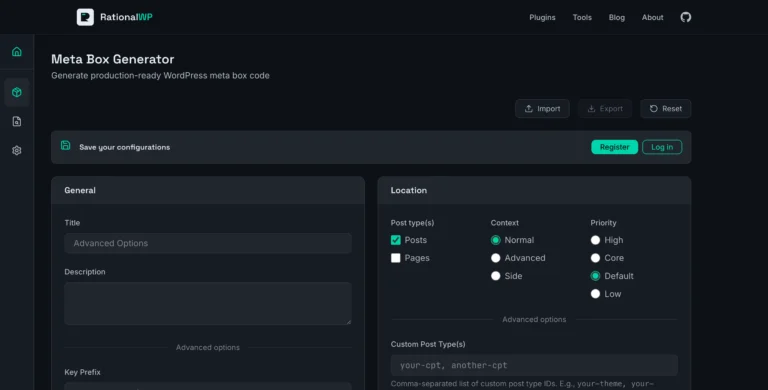
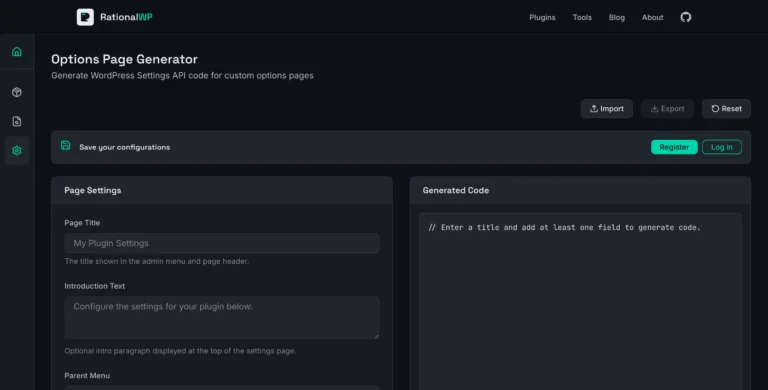
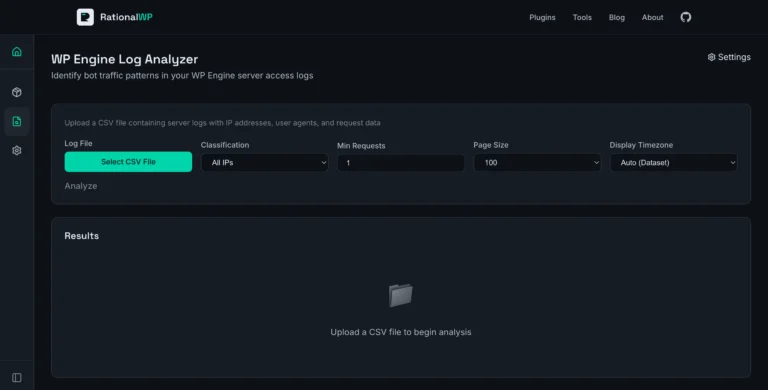
There’s not much for me to complain about, to be honest. Working with AI agents like Claude has opened up so much more time to me. I’ve rekindled 2 older, personal projects; this one for minimalist, focused WordPress plugins, and CreatorTools.us for one-off tools for my own uses as well as anyone else who finds themselves in need. I also started another project THRTL, an app for organizing and getting sponsors for various types of automotive meets. I don’t have to build them myself anymore, I just provide the inspiration and guidance.
This brings up something I’ve said a few times now regarding writing code and my switch to using AI agents; “I’ve done that for 30 years, I don’t need to do it anymore.” I think this is fundamentally true. At this stage in the growth of development with AI I have everything I need to use the tools at my disposal and use them well. I can tell the agent what the next steps are, see the code it’s spitting out, and tell if it’s on the right track or not. I know what should be happening at each phase and what the next steps are. This makes me the ideal conductor.
I’m not sure if the experience of the conductor in the future will matter as much as it does now but, if it does, I think that will be where it falls short. There will be no reason why anyone has to learn to write code. Agents should be able to do everything, they can mostly do that now. Unfortunately, I can also imagine a repo maintained entirely by an unsupervised AI being an enormous and complex mess of duplicate code and documents. Maybe someone with experience will enforce some housekeeping rules with their final, manual deployment.
The Looming Foundation Gap
So, here’s the question; does it even really matter? For now, yes. There are a lot of things that can easily fly under the radar even now. Image and database query optimization, cookie consent, and accessibility instantly spring to mind. That being said, Claude has, more than once, thrown in some accessibility code that I was surprised and delighted to see. Plus, if you know to ask, it can do a pretty thorough job of scoping out those other bits as well. So, given time and a checklist, theretically anyone could do it I think.
That checklist is the key. Any checklist I put together will be based on years of experience. It will also be from the POV of someone who has watched all of this unfold over the decades. Seeing speeds increase, working in the financial and government sectors and knowing their unique requirements. AI Agents “know” about all of this as well but, unless prompted, can you be sure they are including them in the development process? The codebase, to those without the foundational knowledge, will likely be a black box. Hell, put the standard omissions aside, there could be any number of things going on in the background that they are completely unaware of.
Take WordPress hook timing as an example. Often times an agent will get the right hook but it doesn’t always get the order right. If you’re adding scripts or firing off functions without understanding WordPress’ load sequence, you can end up with missing dependencies or content that’s already been embedded in the page before your filter changes it. The code looks fine, it might even work locally, but on production it quietly breaks, loads up the logs with warnings, and can be genuinely hard to track down and repair.
The Conductor’s Quality Control Checklist
- Accessibility: Did the agent include ARIA labels?
- Security: Are there any hardcoded API keys or SQL injection risks?
- Optimization: Are database queries indexed, or did the AI take the “lazy” route?
But a checklist only works if someone understands why each item is on it.
So what’s the answer? I think it starts with ownership. Junior devs need to own the features they’re building with AI, not just verify a positive result and move on. Watch its work. Check its math. Really understand how it arrived at the end result.
That means stepping through the query the agent wrote and asking why it’s structured that way. It means manually testing the edge cases a user might hit that never occurred to the AI. It means being able to explain, to anyone who asks, exactly what that code is doing and why. If you can’t do that, you don’t own the feature. You’re just the one who prompted it into existence.
You can’t assume an agent has considered every angle a real user might come at your application from. It hasn’t sat through a client call where everything goes sideways. It hasn’t watched a production database crawl because of a query it thought was fine. It hasn’t had to explain to a stakeholder why their site went down at the worst possible moment. That experience is what builds the intuition no checklist can fully replace.
The goal isn’t to make junior devs write everything by hand. That ship has sailed. It’s to make sure that when something breaks, and it will, there’s someone in the room who can look at the code and actually understand what they’re looking at.
The New Skillset: Prompting vs. Problem Solving
This is where I start looking at the positive side; I now have time to dream again. I’ve spent so many years “in the trenches” just trying to keep up with the needs of the day-to-day that I’d forgotten what it was like to be able to come up with new ideas and projects. To have time to work on them. It’s extremely refreshing. That is likely where a lot of my positive vibes for the future of development. There’s so much time and opportunity for innovation now.
For existing developers, it can put you into what feels more like a management or startup role. You find yourself supervising a team of robots, building the things you plan and architect. As a side-effect, this could reveal a lot about how you operate in a management role. Keeping up with 2 or 3 development agents doesn’t feel all that different more managing 2 or 3 human developers (aside from the lack of personality and small-talk). It could be that, if you find yourself struggling to juggle multiple agents and tasks, you might benefit from spending time in that environment. It might make you a better manager of people as well.
This is a pretty big shift for a lot of developers. Moving from being another butt in a chair to being a manager and product owner. It feels pretty rewarding once you finish a few tasks, step back, and look at what you’ve accomplished. Knowing you’ve done so in what would have been considered a spectacular pace a couple of years ago. And it’s all yours.
Bridging the Divide: A Path Forward
So, what can we do to help make the future bright for the next generation of developers? Naturally, I put my mentorship hat on and imagine how I might enter the workforce now and still manage to gain the knowledge that I have now. You know what? I don’t know that I do. If you recall earlier, I said “I’ve done that for 30 years, I don’t need to do it anymore.” I think that might apply to things like HTML and CSS even for Jr devs. The things everyone might need is more of the programming fundamentals.
One of the best managers I ever had was a developer at heart. He once told me that he didn’t hire programmers based on the languages they knew but on how they solved the problems. He assigned tasks and the applicants replied with a solution in whatever language they knew. His experiences with hiring are paramount here because if the agent is doing the development, it doesn’t matter what language it’s using of you understand what it’s accomplishing and if it’s coming to the correct conclusion.
Things have changed and they are continuing to change. It’s changing fast. I’ve told a few coworkers that, if they tried something and it didn’t work, give it a week and try again. Most of the time, it’s a matter of days. Remember that the people developing these AI tools are developing them with AI tools. The growth is likely close to exponential. We have to find out joy in the process. For me, it’s being a good manager of agents. Keeping things reigned in following what I know to be the right course. For you, it could be something else, but I think there’s joy to be found for everyone.
The Human Element
AI agents are not a fad. They aren’t going away. The worst thing you can do is ignore it and hope that it does. You can either find your place in the new paradigm or prepare for retirement. For now, we still need a human in the loop to help translate from human to computer. Even when we’re past that, We’ll still need a human to make sure everything is working well and there are no leaks in the boat. The need isn’t going away, it’s just shifting.
Challenge yourself to stand up in front of the orchestra and conduct, rather than being content with sitting in the chair with an instrument and competing for a shrinking number of available seats. Be passionate about your craft as it applies from this new POV. Find a way to apply your passions in a leadership role so that it cascades down from there into everything you do.
The shift from “player” to “conductor” is happening fast. Are you embracing the baton, or are you worried about the foundation gap? I’d love to hear your thoughts—shoot me a message through my contact form or find me on X/Twitter to continue the conversation.